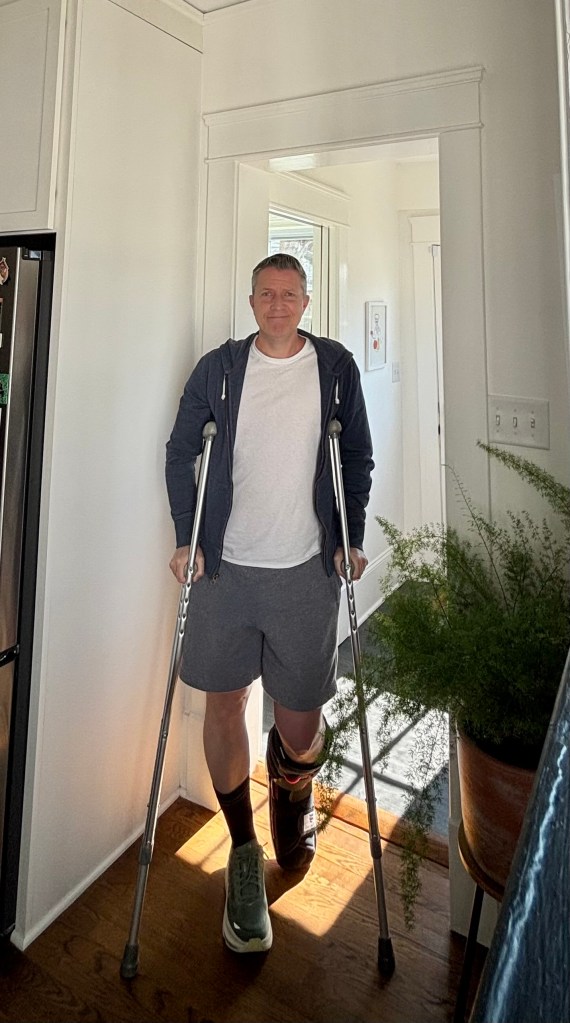
Hello, my name is Christian Alexander Wilson

A reflection on identity, purpose, and the spaces between work and self.

Sometimes the path back to yourself runs through the places you helped build.

Have you ever noticed that when you introduce yourself to someone, almost always within the first few minutes, you are asked, “What do you do?” Most of us instinctively answer with our occupation. For me, that answer was always my title, which changed depending on the year or decade, followed by “with the City of Greensboro.”

For years, I would tell my wife that no one really wanted to talk to me; they only wanted to talk about what the City could do for them or what was happening at the City. I would go on about how no one actually knew anything about me, that they only saw me as “the City.”

At dinner parties, events, birthdays, or even funerals, it did not matter where I was. People who knew me would offer a quick greeting and immediately get down to business. Even when meeting someone for the first time, as soon as I introduced myself and mentioned my occupation, they would dive right into conversation about City matters as soon as the “nice to meet you” ended.

The truth is, for many years, I secretly loved having something to talk about that was comfortable and gave me confidence. I am not social by nature, and that work identity provided a shield I could stand behind. At some point, I was not even sure who I was beyond the job. What I did for a living reflected my passion and beliefs, so using it to create a comfortable space for conversation made sense.

When I did steer the conversation elsewhere, my favorite topic was my sons. Both Caleb and Josh carry distinct sides of my personality, giving me an endless supply of stories to share. The pride I have in them always brought smiles and reassuring reactions from others. Yet somehow, it never took long for the discussion to circle back to work.

I also loved talking about my wife, Cecelia, a leader in our community, a true beacon of inspiration, and someone who humors my constant fanboy behavior. I would proudly boast about her latest efforts in almost every setting. But even then, after people finished praising her accomplishments, they would often end with, “So, about the City…”

As time went on, I began to fear what might happen if I no longer had that identity. Who would I be to others? What would I talk about? I knew I had things to share, my faith, my family, my hopes, and my interests, all meaningful topics depending on the audience.

Sometimes I wondered if it was my fault. I always saw small talk as meaningless chatter to fill silence. I respected others too much to recite sports scores or discuss the weather. Maybe my constant promotion of my beloved City created a platform for others to channel their curiosity about it through me. Work gave me purpose, and I have always been purpose-driven, so it naturally seeped into every part of my life.

I often convinced myself that by representing my work so completely, I was providing a service to my community. That was a good thing, right? I believed in what I was doing. I welcomed criticism, appreciated praise, and loved spreading good news about things to come. It was not wrong, and no one seemed to mind.

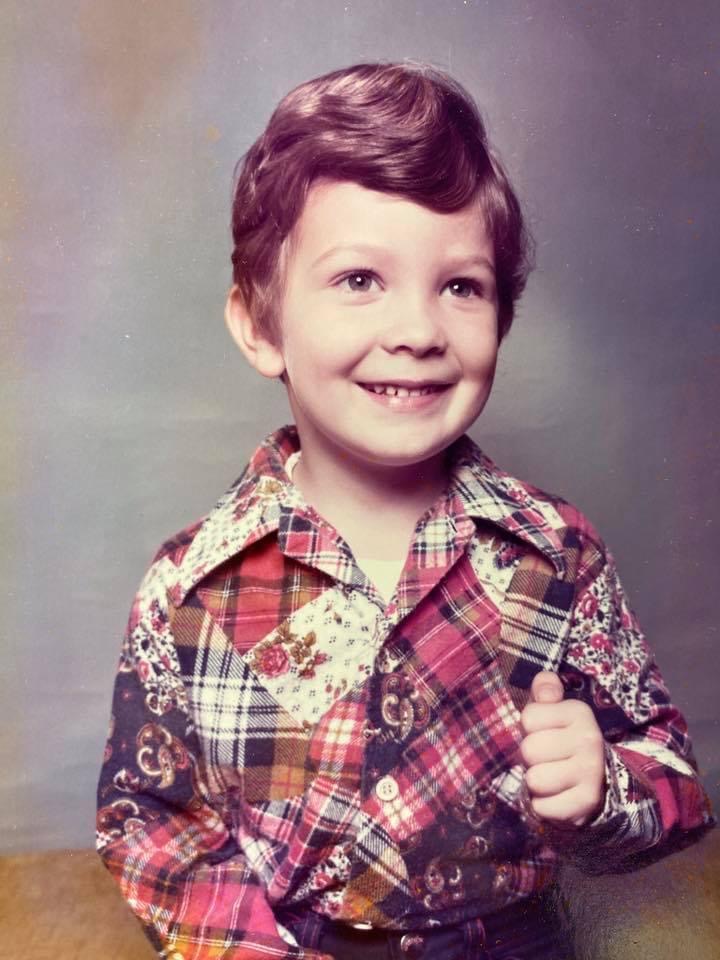
When I was a little boy, I was extremely shy. I often bottled up my desires for fear of failure. But when you bottle something up, it eventually leaks out. My feelings were no different. I remember a day when my mother saw me tap dancing after watching Jerry Lewis on television. She waited until her friends were over and asked me to perform. I always blushed and shied away, except for one day when her encouragement broke through my fear. I danced like I had been doing it all my life. The reaction was incredible, applause, cheers, smiles. It felt wonderful. But afterward, I convinced myself I could never repeat it and never danced again. Instead, I learned to distract and redirect attention until people stopped asking.

Work was similar. I would pour my passion into a project, one initiative at a time, and then move on, convincing myself I could not repeat the performance. The reactions to my work made me feel accepted, so I clung to those conversations like a security blanket. As the years went on, a little voice in my head whispered that one day this work would be behind me and I would have to tap dance again.

I wondered if that was what I projected in conversation, someone holding tightly to what felt safe because it gave him confidence. Maybe it was my fault that work was all anyone wanted to discuss. Maybe I was afraid to step into a space that felt less certain.

Whatever the case, I knew the day was coming when that blanket would be taken away. As it loomed like a cloud, I searched for a way to hold onto my identity.

On July 1, 2025, I woke up and realized I was no longer Chris Wilson with the City of Greensboro. I was simply Christian Alexander Wilson again. No blanket. A dad, a husband, a hiker, an occasional blogger, a science fiction and superhero fan, a decent basketball shooter from outside the perimeter, and someone who loves to photograph wildlife and landscapes. For all the accolades and accomplishments of my professional life, I knew that the version of me most people never knew was what remained, and what I had to offer in conversation and in life.

I remember those first few outings feeling awkward, as people still wanted to talk about the City. Another easy topic was “retirement,” which I quickly corrected once I found a new opportunity to engage in meaningful work again.

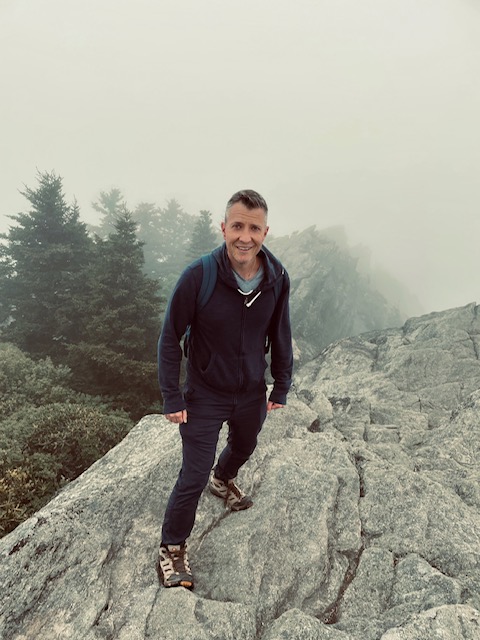
At times, it made me sad and even frustrated. It left me questioning who I really was. In those moments, I would go for a hike. One day, I just kept walking. Twenty miles later, I began to find clarity. I was hiking twenty miles, passing places I had touched in some way, each with a story I could tell. Along the way, I saw friends who honked their horns or rolled down their windows to shout encouragement. Even the sounds and smells of the journey reminded me of projects and efforts that filled me with pride. I took pictures, reflected on memories, and later wrote about what I had experienced. And then it hit me.

Those sights, memories, and feelings were mine. They had been shaped through my work, but they were still part of me. They came from who I am, not just what I did. I had never allowed myself to see that those experiences were not only the City’s efforts; they were my own. Yes, I did them as part of my job, but I also did them because that is who I am.

And if that is part of who I am, then those memories, and the moments I will have forging ahead in community work, will not be a shy person’s shield but meaningful topics of conversation that truly reflect who I am.


Christian A. Wilson

I Think Myself Happy… I Am Blessed

It feels like just yesterday I was anxiously awaiting my first group of tennis campers, sweating through long, hot days, lugging 50-pound bags on each shoulder to resurface clay courts. I often miss those early mornings in the parks, chainsaw in hand or riding a mower, watching the sun rise over a quiet lake or catching deer roam freely as we readied for the day.

I miss the thrill of seeing an event come to life and the joy it brought to thousands. The anxious energy of a search, and the unmatched joy of a rescue. The kind of sleep that only comes after working from sunup well past sundown.

As time passed, the experiences evolved. I felt the warmth of resident appreciation, and the pressure of high-stakes negotiations. I learned to navigate the complex terrain of community advancement trying to dismantle barriers without disrupting the hopeful foundations beneath them. Each day shaped me for the better, because that’s what this city deserved. That’s what you expected.

Never one to enjoy disappointing others, I pushed myself to be whatever was needed. Whether building infrastructure to support growth and access, finalizing deals to bring jobs and investment, or fusing my passions into bold visions for the future, my heart was replenished again and again.

But perhaps the greatest gift was the chance to help others reach their professional goals. Watching wide-eyed newcomers to public service evolve into confident, seasoned leaders driving real change, that is a kind of fulfillment words rarely capture.

Public service is a roller coaster of emotion. It stretches every fiber of your being. You are driven by the will to help, yet constantly challenged by competing priorities.

I love this city. And it loved me back. It loved me in ways that made me better, made me understand what matters most. Maybe it took me longer than some would have liked, but I gave you everything I had. That included stress, yes, and on occasion blood, sweat, and tears. Once or twice, even near-death. And sometimes, I became the focus of public frustration. But through it all, I appreciated the smiles, the thank-yous, and most especially, the hugs.

I did this work because I believe in it and because I believe in you. I never quite felt like it was enough. There was never enough time. I made mistakes. I made progress. I kept going.

To those who choose this life of public service, I leave you with the simple philosophy that guided me: In the morning, ask yourself what you will accomplish. In the evening, ask yourself what you did.

This season has felt like a movie. And to borrow a line: “I have served. I will be of service.” This isn’t the end, it’s simply the closing of one chapter. If I’ve done my duty, then maybe there will be a sequel. A spinoff. Who knows? Maybe even a franchise.

I will miss the magic of seeing a well-crafted plan come to life, smiling through tense moments to reassure others, and watching the joy on people’s faces when our collective efforts bore fruit. I’ll miss handing out lapel pins to kids who came to council meetings, encouraging others to dream big, and all the little things that few ever saw.

Stepping away from public service is one of the hardest decisions I’ve ever made. But it’s not selfish, though it may appear that way at first glance. There comes a time when you know your tour, as worthwhile as it has been, must end. Staying too long can block a deserving opportunity for someone else. Many struggle with letting go or convince themselves that no one else can do the job. I had no such struggle, not when I see the extraordinary talent all around me.

This ending is a beginning. I’ll return to helping where I’m needed most. I will still support the community I love and it gives me more time to support my incredible wife, who is a tremendous leader. I’ll continue to beam with pride at the work my sons do, led by hearts full of compassion. I’ll take more photos (Instagram: @chris_wilson_in_gso) and continue writing (www.qualityoflifeisaright.com)
Maybe I’ll even learn to sleep again… or finally have time to watch more sunrises.

My friends…

The time has come to say goodbye, it may bring a smile or it may draw a cry.
But I’m still here, so don’t write me off yet, the memories we made, I’ll never forget.

We dreamed big and many dreams came true,
Some were so bold, there’s still more to do.
I gave you my heart, my mind, and my all, hoping you felt lifted, supported, and tall.

If ever I did one small thing that lives in your mind,
Then all of the struggle was worth the climb.

— CW

Take Pride in Your Performance

Something in our vocation gives me great pause. I could blame it on our culture’s divisiveness, or perhaps our fragile nature in a socially toxic environment rampant with misinformation. Maybe we’re just exhausted from weather-driven catastrophes, pandemics, or the seemingly constant violence around us.

As with any concern, we must consider why it exists and what comes next. Acknowledging a cause and effect does not necessarily excuse subsequent behavior. Many behaviors are sparked by things beyond our control, hard to process, and drain our emotional capital. Processing can take time and may involve others, but what we do next and how we handle it makes a lasting impact. This is especially true in public service.

I hope you will receive this in the spirit of observation. If it resonates with you, do me a favor and let it ruminate for a bit. Then decide if it’s worthy of consideration.

Many public servants no longer take pride in what they do. In previous essays I have shared my undoubted belief that public service is vital work, often tied to the very nature of the one who provides it. It’s impactful, life-altering, and often leaves a legacy. No community can succeed without effective public service. I have often shared the stories of public servants’ remarkable nature and selflessness and I author these pride-beaming words to tell our side of the story and shine a light on what we do.

But, today, I have reason for pause. Not a grave concern or a hopeless dilemma, but definitely an alarming trend. As I look around, I sometimes see the projection of fatigue in service. I see some employees cut corners or shy away from duty. I can almost feel some workers’ disdain toward their responsibility and even their colleagues. I’ve seen curt behavior and an unwillingness to serve.

What’s more puzzling is I don’t just see this in folks new to the profession, those less experienced in managing the work’s challenges and frustrations. I see this behavior in seasoned professionals, those on a promising career trajectory, and those reliable in reputation.

Right or wrong, I have made this profession a big part of my identity and I’m proud to have worked with many others who do likewise. It’s a unique comradery. The fruit of our labor is an intrinsic injection that energizes our days. Society’s need for what we offer can’t be accurately valued in modern metrics. However, some of us are beginning to wane.

I see this in most every organization and profession. It was bad and now it’s worse. Our expectations of customer service are a shadow of what they once were. We’ve become so accustomed to such lackluster service that we either don’t realize it’s missing or we just accept a half-baked effort. I suppose the reasons for this trend mirror those that explain why public service is showing dents in its armor.

While many professions and services must consider course correction for lack of effort, none are more imperative to a community than public service. We can speculate on why, but we must not miss the critical response. How we respond to this trend as public servants is tied to daily function, economies, infrastructure, and quality of life. We are professionals who show up on a bad day. We take an individual’s venom and bite and build an immunity that allows us to continue serving. We host no Golden Globe Awards, and rarely even get honorable mentions, but we wear our duty like a diamond-studded, 24-karat gold championship ring.

At least we used to.

Public administration is the last castle amongst an empire of service, and our walls are breached. A lack of effort cannot become the norm. Too many people count on us. I wish I could tell you how we got here, but that would likely negate each individual’s path to this prideless place. Here are some reasons why we must move forward with a renewed sense of responsibility.

If you are a public servant, you are special. You are a hero, a role model, and a trusted girder on the bridge of society. You work with a dedicated group of people who make it their passion to help others. Your effort not only affects you and those you serve. Whether we like it or not, your effort reflects on all of us.

Let your reasons for pursuing a career in public service outweigh those things that hold you back. What has happened before is behind us. We must chart a better future. Many counting on us. The burdens that weigh us down are heavy, but our responsibility to serve is heavier.

Take pride in what you do, and you will help others.

Take pride in what you do and you will inspire others.

Take pride in what you do, because those who came before you and those who work with you now (like me!) believe in you. You can help others carry forward.

We are foundational elements in our communities. May we also be the change we wish to see in humanity. Lead by example and take pride in what you do. Your effort will be appreciated, particularly in a society facing so many concerns. Be the constant bright spot among the people you support. You never know when that one thing you do for someone else will result in meaningful and beneficial change.

Written by: Christian A. Wilson

Editor: David Walters

What can I do for you today?

Every few months or so, I stand in front a group of new public servants to greet them and welcome them into our profession.  Often, I am asked to review a power point that goes over the highlights of our core functions. While this is a great opportunity to share some important information, I usually spend a lot less time on the power point and opt to talk about what helps me stay focused on the good days and the bad.

I share that many of us choose public service because we recognize that it impacts community in a positive way. What we do, can have a profound impact on quality of life, access, and human success. We connect you to transportation, water, recreation, safety, employment, and so many things that allow you to support the fundamentals of life. We should take that seriously. It’s a privilege and a responsibility. There are good days, in which you recall having an impact that carries you through the week and there are bad days in which you question the choice of employment you have made. There will be days of significant appreciation where someone expresses to you their gratitude for everything you have done for them and there are days where someone acts as if your very existence has caused them pain. We don’t always earn the response we get from the public, and it can be incredibly perplexing when our efforts aren’t matched with an expected response. We give it our best regardless and the outcomes can often win over the hardest of hearts.

While this message seems straight forward and comes as no epiphany to anyone, what I often offer next can get lost in the day-to-day race.  If you agree that what we do is important, then we must remind ourselves to gauge success. Many of us use spreadsheets, counts, and various forms of data to measure what we do, but there is a more straight forward method that we can use every day, that will remind us of where we have been and where we are going.

When you wake up, ask yourself the question, “What will I do today?” When you go home, ask yourself, “What did I do today.” Perhaps you already do it. Or perhaps you did and shied away from continuing because you didn’t like the answers you were providing. Whatever the case may be, I’m suggesting you give it a try, even if you’re doing it again. Be honest with yourself, and regardless of reactions, you will stay on task and centered.

If what we do impacts others, and we do it because we want to help, it stands to reason that we need to know we are making a difference.  Those simple questions, allow you to not only know that you are, but that you will be intentional in trying to be helpful every single day. Whether you love talking about work after hours or not, you are likely to be asked how it’s going or what is happening at work. Believe it or not, people value what we do and genuinely desire to know what’s going on.  Wouldn’t it be great to share a story of what you did today? I love hearing about your days of impacting community, but more importantly, I want you to remember what you set out to do and what you accomplished. 

So, what did I do today?  I shared a message reminding public servants that they can set out to do great things every day, and I reminded everyone that I believe they can accomplish it.  We simply have to do it. 

I am I said….

Who was I to be? Do you ever ask yourself that question? Do you ever wonder, did I follow the right path or did I miss my calling? I did, for the longest time. Why though? Did I really feel like I had missed the mark in the very decisions of life? I have learned those questions derived from self doubt. Sometimes even from a place harkening to the alleged limitless potential that I never thought I quite lived up to. What did I accomplish? Didn’t matter, because it wasn’t everything I could have done. I was totally convinced.

It seemed as if I worked hard to remind myself that I didn’t do enough. I wasn’t enough. In a world of suffering and anguish, I did not do enough to help. I didn’t meet the standard. Therefore, I failed and no matter what I did from that moment forward, I would never achieve the satisfaction of knowing I lived this life well and to the fullest extent. Trapped in my own delusional prison of limitation. No past could be remedied and no present could be void of the past.

Makes you wonder, where did this pattern of thought come from? How could someone who got up everyday trying to make difference, feel so worthless about what they had done. I had a hunch that perhaps all the naysayers and doubters I encountered, had more of an impression on me then I thought.

People I respected, familiar faces, the occasional crush, or just the mean people who thought different was bad and therefore I was weird. They all said things, repetitiously, and convincingly. Unfortunately, I wore my feelings on my sleeves, making me an easy target, until one day I didn’t. I stopped hearing the insults, but I wasn’t able to hear the compliments that came later either.

Now don’t get all sentimental for me. I was no different than anyone else. We are all subject to these things. I consider myself lucky, as I saw much worse with others. So why then, did it mean a so much? Simple, I allowed doubt in and by allowing it to, doubt grew inside me. Like many growing things, self doubt, became a giant monster of an obstacle in my life. To breathe, I needed constant grading and reassurance. I had to see major success to accept a small amount of reprieve. I would have happily died trying to be better, trying to be something others could be proud of.

If anything I have written here even remotely strikes a chord, then do me a favor, and read this next statement very carefully. It was all bull shit. No one in our time has led the societal perfect life. No one has cured all ills by the measure of nirvana. No one rode the horse of righteous perfection down the straight and narrow road to sainthood. It took a lot to convince me, including a self torturous number of years, but I finally saw that it was all a facade.

In a world where individuals can thrive, and differences can yield beauty, I was always good enough and so are you. I was exactly where I was meant to be, in each and every step, good or bad. Those who said otherwise were equally as tortured and also less than perfect. I controlled my path and I get to determine how well I walked it. The only thing that ever held me back, was believing that I wasn’t good enough. I saw the beauty in everything accept myself, which means I was blind.

It’s time we all opened our eyes, opened our ears and taste the sweetness of accepting our value. Don’t let anyone tell you otherwise. Don’t believe that you didn’t do enough or you didn’t choose the right path. Your path, gave you scars, it made you cry and bleed, but it also gave you joy and perspective. Your path made you who you are, and made many others value who you are. You impacted others and you left a mark.

Here’s to us! A life well lived, and life worth cherishing. You’re being who you are meant to be. You define who you are and if you decide to change the definition, well that’s totally your decision. Go be who you are and don’t let anyone make you doubt it.

A Lesson Learned in Communication

Despite my many years of public service and heavy involvement with communications, I find myself in a constant state of evolution that never seems to cease. New platforms and new levels of engagement constantly keep me guessing. One thing has not changed though, we must continue to try and communicate with each other, no matter how hard it may be.

When I was a kid, I remember a very impactful encounter I had while on vacation.  I often roamed, and got lost, and this day was no exception.  In particular I ended up in a store, scared and confused as I did not know how to reconnect with my mother and older brother.  Bouncing from aisle to aisle, I met a young lady who approached me with kind eyes and a beautiful smile.  Her approach immediately calmed my anxiety, but she used no audible words. Instead, she began to use sign language. I recognized it was sign language but felt inadequate as I did not know the signs. I wanted so badly to know and converse. Her patience with me was inspirational.  Just as it seemed we were beginning to have a level of understanding, my mother showed up.  I did not want to leave.  I pleaded with my mother to stay so I could have more time with this wonderful person.  Time was not on my side though and I left without ever knowing her name or how to reconnect.  I cried as we left, hoping that I had not disappointed my new friend too much by not knowing sign language.

Later that year I decided I would find ways to learn signs in hopes of one day finding my friend again, in a Hallmark Christmas Movie fashion. How relieved we both would be that we had a common method for communicating with one another. Unfortunately, the day never came, memories faded, and I lost much of what I had learned.

Fast forward many years, and I was working in the park system. One late afternoon, I was in our park office and received two patrons.  I welcomed them in and asked what I could do to assist.  They gestured for a piece of paper and a pen.  I quickly provided it to them and eagerly awaited the response. They let me know that they would be utilizing written instruction unless I was fluent in sign language.  Ashamed, I hung my head and responded in writing that I could not sign, but would gladly assist. As they left after completing their business that day, I recalled my earlier childhood experience and decided I must rededicate myself to learning sign language once again.  

I waited a whole year for an opportunity to communicate through sign language in my professional life.  As luck would have it, the same patrons came back to reserve a shelter. I was so excited to share what I had worked on.  The smiles I was met with were worth more than a whole year’s salary! They praised me for what I had learned and then I shared with them the inspiration they had lit inside of me.  Just as they were about to leave they provided me with some signs that I just did not know, so I signed, “I do not understand.” Looking at one another and then at me, they made a sign slapping an “L’ against their upper chests. I shook my head again, indicating I didn’t understand that sign either. Shamefully I handed over a paper and pen. The response was, “lazy is the sign and keep learning, is what you need to do,” to which they both laughed a little.

My lessons learned in both those experiences could have been very different.  I knew that I needed to work harder to find a way to communicate in a way that was desirable and respectful to the other person.  It would have been easy to get frustrated and give up. 

Barriers to communication today can exist in many forms.  We don’t all speak the same language.  Sometimes, we speak the same language but don’t interpret the same way.  Sometimes, we are so distant in our positions that communication seems impossible.  Sometimes, we expect the worst in response and so we fear communicating at all. 

Should we give up when it is hard to communicate?  Should we just quit communicating?  You would be surprised at how many people respond yes.  Or, maybe you wouldn’t. I truly fear where we may land if we give up on trying to find ways to communicate with one another.  It was okay for me to feel like I hadn’t communicated in the best manner. It was okay for me to need to try and improve my communication.  The worst outcome would have been that I gave up. The satisfaction of connection and working together, far outweighed the effort in overcoming obstacles.

History is ripe with tough communication amongst people.  Nothing significant has been accomplished without trying. It seems like my lesson learned is one that now, more than ever, stays true to what I must endure to keep communicating. I hope you will join me.

If you go 100 mph all the time, what do you see?

Ever travel at an accelerated rate of speed? Of course you have. You’re in a hurry. You’ve got places to be. Deadlines to meet or things to get done. Only so many hours in a day right? Ever drive past something that you wanted to see, but went by it so fast, you only catch a blur or fraction of the view? Imagine seeing the Statue of Liberty for the first time, but going so fast that you barely saw the base of the structure. Disappointing at best I would imagine.

Moving fast isn’t limited to travel though. We rush through work, activities, experiences, and ultimately life. Everyone is guilty of it on occasion, myself included. Many of us understand the benefits of what we gain when we go fast. Perhaps we complete multiple tasks. We get an intended result faster or we just get a much deserved sense of accomplishment. Moving fast isn’t a bad thing necessarily. There is, as always, a time and place for everything though.

Hopefully we can make informed decisions when we evaluate going fast. Understanding the value we lose when we go fast should be just as commonplace. Culturally, we have lost some of this understanding in large part, due to quick access to almost all services and functions. Order a package and get it tomorrow. Look at the news in a matter of seconds. Download your music or games by the time you finish folding your laundry. FaceTime your friends face to face and visit without ever having to get on a plane or hop in the car. Those are all wonderful advantages that allow us to overcome multiple barriers. Not a bad thing at all. I have dedicated my whole life to figuring out how to overcome barriers, so I am ecstatic about what speeds up or creates better access.

In contrast, I have also come to appreciate the unintended consequences of going fast as well. What are we missing? What are we not seeing or experiencing? Often something more meaningful in my opinion. If you are like me, you have been busy for years trying to cram accomplishments into a condensed period of time. Driven by a desire to do the most good and produce the most outcomes, many of us will drive fast through life with a fear of no promises for tomorrow.

If two people are walking a trail, one intends to get to the end as quickly as possible so that they can finish and the other takes time to stop along the way but takes much longer to finish, who gets the most benefit? Who saw the hawk in the tree? Who saw the crocuses blooming? Who sees a quartz formation? Granted, the slower person didn’t finish first and can’t say they lay claim to fastest walk on a trail. For some, that may be equally as valuable.

The value proposition is very different though. A claim to finishing faster will likely be one of many simple accomplishments that in quantity may hold some meaning, but will fade fast as a memory. In contrast, a story about the hawk, flowers and quartz formation could mean something that lasts much longer. Beyond a visual impression, you’ve experienced the earth’s offerings, peaked a curiosity or knowledge and discovered special moments that come far too seldom.

Both experiences can fulfill. I simply propose that going fast doesn’t allow for an experience, which for some, could be a very meaningful memory or produces additional benefits. By knowing that, you can decide what has more value for you, but just remember, you can’t see as much, when you go 100 mph.

This isn’t as simple as a trail walk though. On a grander scale, maybe in life, we take a little longer for vacation so we can see more. Maybe we stay an extra hour during a social visit to have a more meaningful conversation. Maybe we spend an extra day planning for a project so that we give due consideration.

As I watch our society enjoy the offering of quicker benefits, I fear a forgotten understanding of value in experience. Particularly as the generations that follow become more reliant. It is for this reason that I have chosen to take some time on occasion to experience life at a different pace, that allows sight of what is around me. Maybe it is time for some of us to set an example for those who have seen us live at a quicker pace, always pursuing quantity as opposed to quality.

Society has little tolerance for taking more time.  Our culture doesn’t always accommodate our desire for pace.  We are part of society though and we help craft culture. Taking the opportunity to lessen the pace and enjoying more of the experience doesn’t have to be every time or with every facet of life, but where we can, it is worth trying.  Going 100 mph can often end in a crash without reaching your destination.  Going slower, with more awareness can result in reaching the destination safely and with the benefit of remembering the journey.


An Unexpected Path

It started when I was five years old. By “it” I mean my determination for equity in quality of life and more specifically in community service. My mom was constantly searching for free things my brother and I could do.  She remembered that, prior to my father’s departure, his employment allowed us to go to a country club in Greensboro.  The facility had tons of recreational options that would allow us to play on our own terms.  At the time we had no real income outside of good will and government subsidy, so my mother thought this would be a pleasant surprise. My brother’s mobility was limited as he had just been upgraded from a wheelchair to leg braces that he would have to learn how to use for some years to come.  We loaded up into the beige station wagon with the cool lay-down seat in the back end. Then, we headed into the city, watching the road in reverse as if we were leaving all our troubles behind.

When we got to the entrance of the facility, we were filled with excitement. I loved seeing the joy on my brother’s face upon our arrival. He had often endured the ignorance of small minded people who had less aptitude for seeing the beauty within others who may seem or look different than themselves. Even my mother’s face filled with delight knowing she would succeed in taking us away from all the small town gossip and rumors that surrounded my family, even if for just a day.  We didn’t mirror the expectation of normalcy in our community. We were so different that I often thought everyone else was strange instead.  Seeing the happiness on her face made me feel like she had forgotten the daily challenge of how to provide food or shield us from the awful truths that surrounded us. She had dealt with an abusive, alcoholic, former spouse and my other siblings who had fallen prey to the temptations of the world for so long. It was nothing short of a miracle that she still wanted to get up in the morning, much less make sure we had some type of fun.

I loved playing of any kind. My father had been a local, star athlete and I often thought if I could match his success I would get the attention I wanted from him. Being outdoors was my sanity. I ran away to the woods almost every day. The wildlife I encountered were my best friends and they never betrayed me. Our destination that day would offer all of this and so much more. This place was a childhood Shangri-La if ever there was one.  It was to be our day!  Nothing could interfere with the happiness that would find its way to the fraction of what was left of our family.

Pulling into a parking space with this much anticipation always felt like a bad slow-motion sequence from a movie.  As I peeked out the window I could see the top of the clubhouse.  I admired it as if it was the entrance to see the Wizard of Oz.  Once we got inside, the Wizard would take all our troubles away and all our future paths would be yellow brick roads. I saw the faces of people coming in and out, and everyone was happy.  For a brief moment my anxiety rose, fearing they would detect or smell our lack of culture, financial stability or normalcy that was needed to blend in. Then I remembered that nothing bad ever happens in this happy place. My mother opened the back door. Freedom!!! No matter what pace my brother moved at, I always chose to move at the same. I was so proud to be his brother that I never wanted anyone to mistake that we weren’t related. We walked in sync following our mother to the front door of the clubhouse.

Mom ran up ahead of us to be greeted by someone staffing the entrance.  Oddly the exchange looked less than happy. No happy faces, just a look of disgust and then a look of shame on my mother’s face.  She walked back over to both of us tearfully and broke the bad news. “We aren’t members here anymore,” she said with a whisper. I didn’t understand.  What in the world was a member, and why did I need to be one to play?  Why did my brother need a membership?  Had he not paid his dues in so many other ways? “A membership is what we have to have to play here,” my mother said. “When your father left, he revoked our privileges, along with any hopes of income,” she murmured.  We stood there in astonishment.  Suddenly she gathered herself and with an award winning performance, pepped up and said with as much energy as she could muster, “but I negotiated the opportunity for you all to play in the front yard.  I brought a ball with us and you all can throw it back and forth.”  We did just that.

That day would be defining one for all of us.  My mother became very assertive and creative, hoping to avoid what would end up being many more like situations for us over the years come.  My brother developed a wicked sense of humor with a strong desire to be financially successful. As for me, well that took awhile to work itself out. At the very least I recognized that we could always make the best of every situation. The way I felt that day and many other days to come, really didn’t bother me half as much as the way I felt when I saw their faces, or how I felt when I thought how much it must have hurt them to not even have the simple right to play on the terms that we wanted. Through the eyes of a child we often have an innate sense of right and wrong, and in this case it just felt wrong. In my later youth, my behavior declined. I became aggressive, introverted and, dare I say, vengeful toward all those who I thought had influence or money. You know the story. Mine isn’t isolated.

Many years later, while attending college, I took a job with the local parks and recreation department. I worked in athletics and the role I had was eventually contracted out to a commercial operator.  For three whole months I worked in the private sector and gritted my teeth behind the smile of serving individuals who treated me as if they needed to wipe me off their shoes after every encounter.  I called my old boss in parks and recreation and asked for anything they had to get back to serving in a more intrinsically fulfilling fashion. She laughed and said, “How are you with a cash register?” I responded, “I am a quick study.” What she said next though moved my stomach to the lower part of my knees and even as I write this still makes me feel that way.  She asked me if I was familiar with the old country club. I whispered back an unenthusiastic yes. She said, “Well it is a public facility now as a part of the company’s liquidation of assets and we are out here trying to give the public the best of what is left here.”  “I am in,” I finally said after a long period of processing. I was to return to the very facility I was turned away from so many years earlier.

That call and the previous childhood experience marked the start of what became my obsession.  I worked at that facility morning and night, and every day in some capacity. I gave everything I had to make sure we provided the best, most affordable services to everyone who wished to participate.  Over the years we negotiated deals, worked for support, and assembled a like-minded team to provide what eventually became the best park/event center asset in the system in many regards.  When we left we had close to a million visits a year with hundreds of recreational opportunities.  My passion grew to work with many more facilities and services as an eventual director of parks and recreation.  I believed so much in the work we did that I applied to become an assistant city manager where I reside today.  I am still using those experiences from my younger years as guiding principles day in and day out.  Ironically, every position I ever held was not about a promotion or even salary for me.  Instead, it was a larger opportunity to provide what everyone should have access to.  I never charted the path I was on.  I did decide to keep going though, finding that all paths can be a little more“yellow brick” in some fashion for others, and someone has to care enough to make it that way. That’s what public servants do, we epitomize that sentiment. If we do for others, and we do it well, they will rarely know how it all comes together or even what the story is that brought us there. This a small portion of my story.  There are many more impactful stories out there amongst us. Remember your story every day and you will never lose your path, even if it was uncharted.

With Great Power Comes Great Responsibility

033E1292-6168-43D8-BF94-DD27DFD6D95A

Even Clark Kent and Diana Prince couldn’t be Superman and Wonder Woman, all the time. As a public servant though, is this really okay? Are you expected to be super all the time? If I am being honest, I am, by many who simply expect me to have all answers, have total recall, and be all knowing in many respects. The older I get, the more distant I seem to be from meeting that mark, especially when it comes to the recall, but I really don’t mind the image of being considered “super.”

Why is it that so many expect so much from their public servants? My two cents: we are to blame. We have created a culture of great expectations. Public servants are quite special. We strive to make the imagery of “super” true. We will work all hours, miss personal milestones, and essentially push ourselves to the brink of insanity to make sure others are supported.

What makes a person go to such lengths to please others? There are a host of reasons. I will focus on the most prominent one. Throughout my time in public service, I have had the fortunate opportunity to forge relationships with many colleagues. Whether it be at the coffee maker or providing greetings at the first day of employee orientation, I find myself thirsting for the answer to one question. Usually accompanied by a welcoming smile, I ask, “What on earth made you decide to sign up for public service?!?” The response is often the same, whether offered quickly or from relenting to my tireless digging for the answer.

First, remember your favorite super hero has to have an origin! All of the good ones do. Origin stories help us understand the very drive of our super hero. Ironically, that origin is often the same humanizing quality a hero possesses as well. The struggle with ones’ “super self” is often all about the very thing that spurred them to dawn the cape. Before I get way too nerdy for my readers, let me offer what this one, common response to my question is and give the true origin for public servants.

It’s empathy! Where many may be born with an understanding, most of us gain it through experience. Allow me to offer that those who have struggles can often be understood better by those who have also struggled. I have heard origin stories that range from abuse to limited access. My own story begins with a feeling of shame and limitation. Of all the super public servants I meet, each has some pivotal moment that spawned a burning desire to support others. It is often in an effort to prevent these enlightening, but oh so humbling experiences from happening to others.

What’s amazing about this empathy is that through public service, we gain the super power, that allows us to create paths, support others and generate circumstance to pave a better offering. We help with employment, transportation, quality of life and safety! At the risk of letting my super status sound a bit narcissistic, we change lives and impact society daily. It’s an intoxicating notion, but a true one. To have such an ability is fairly addictive and not a feeling you wish to relinquish. It drives us to forgo many of our own personal wants to afford opportunities for others.

I am not suggesting we mirror the perception to the point of burnout, but I will say, who can blame us for the never ending pursuit to serve others? We have the gained experience, the ultimate motivation, and a tremendous incentive. Those who are served don’t always show the appreciation we would wish, but even one thanks a month provides the justification that our pursuit is just. In lieu of constant praise we often seek affirmation through expectation. In other words, we love the image of a super hero and even if the constant expectation wasn’t there, we would desire it regardless. The more you want us to be super, the more we want to be.

For those who count on us, remember our origins, and even when we fall short, the desire is there and for good reason. For those of us who serve, remember your origins, and accept that it drives you, but even Clark Kent and Diana Prince couldn’t be Superman and Wonder Woman all the time.

Author: Christian Wilson
Editor: Joshua Wilson
Contributor: Tracy Pegram